ADHD: A Neurodevelopmental Condition With Modifiable Components
Attention-deficit/hyperactivity disorder affects an estimated 5–7% of school-age children and 2.5–4% of adults globally — making it the most prevalent neurodevelopmental condition and one of the most common psychiatric diagnoses across all age groups. The neurobiological mechanism is well-characterised: ADHD involves insufficient dopaminergic and noradrenergic neurotransmission in the prefrontal cortex and striatum, impairing the 'top-down' regulatory circuits that govern sustained attention, impulse inhibition, working memory, and cognitive flexibility.
Stimulant medications that increase synaptic catecholamine availability are the most effective pharmacological interventions available, with three decades of RCT evidence confirming their short-term efficacy. But the functional medicine question goes further: for a condition driven by catecholamine dysregulation in a nutritionally dependent system, what role do modifiable nutritional, environmental, and lifestyle factors play in amplifying the underlying neurobiological deficit — and can addressing them reduce medication requirements and improve treatment outcomes?
The Dopamine-Norepinephrine Deficit: Genetics and Modifiable Amplifiers
The genetic architecture of ADHD involves numerous common variants of small individual effect, cumulatively explaining approximately 50% of heritability. The most functionally significant for treatment considerations are:
DRD4 7-repeat allele: This dopamine receptor D4 variant is associated with reduced sensitivity to dopamine — affected individuals require higher synaptic dopamine concentrations for normal prefrontal signalling. The 7-repeat allele has been found in higher frequency in ADHD populations across multiple ethnic groups, though it is not diagnostic and is common in the general population.
DAT1 10-repeat allele (VNTR): The dopamine transporter (DAT) removes dopamine from the synapse; the 10-repeat variant is associated with higher DAT expression (faster dopamine reuptake), reducing synaptic dopamine duration. Methylphenidate's primary mechanism is DAT inhibition — patients with the 10-repeat DAT1 variant may respond preferentially to methylphenidate compared to amphetamines in some pharmacogenomic studies.
Against this genetic background, several modifiable biological factors can amplify the dopaminergic deficit. Iron deficiency reduces tyrosine hydroxylase activity (the iron-containing rate-limiting enzyme in dopamine synthesis), reducing the baseline capacity to produce dopamine independent of genetic receptor sensitivity. Zinc deficiency reduces dopamine modulation and may impair the efficacy of amphetamine-class medications (zinc is a cofactor for the enzyme that converts L-DOPA to dopamine). Magnesium deficiency impairs NMDA receptor function in ways that interact with dopaminergic regulation. Sleep deprivation reduces striatal dopamine D2 receptor binding (documented by PET imaging), effectively mimicking the receptor desensitisation that worsens ADHD symptoms. Heavy metal accumulation — particularly lead (documented neurotoxin for dopaminergic systems at even sub-clinical blood levels in the 2–5 mcg/dL range in children) — independently predicts ADHD severity in population studies.
Sleep Deprivation: The Bidirectional ADHD-Sleep Relationship
The relationship between sleep and ADHD is bidirectional and clinically underappreciated. ADHD causes sleep problems — delayed sleep phase syndrome is three times more common in ADHD patients than the general population, driven by dopamine-mediated clock gene dysregulation and the difficulty of voluntarily disengaging from stimulating activities when dopamine drive is high. Simultaneously, sleep deprivation independently produces symptoms that are clinically indistinguishable from ADHD: impaired sustained attention, reduced working memory capacity, increased impulsivity, and emotional dysregulation. A 2023 meta-analysis found that mild sleep restriction (6 vs 9 hours per night) produces attentional performance decrements equivalent to stage 1 ADHD severity in neurotypical adults.
This bidirectionality creates a vicious cycle: ADHD impairs sleep initiation; poor sleep worsens attention and impulse control; worsened executive function makes sleep hygiene even harder to maintain. The clinical implication is that sleep optimisation should be a priority component of any ADHD treatment plan — not an afterthought. Melatonin at low doses (0.5–1 mg at bedtime in children, 1–3 mg in adults) has RCT evidence for reducing sleep onset latency in ADHD without tolerance or dependence concerns.
Nutrient Deficiencies in ADHD: The Testing Priorities
A functional medicine evaluation for ADHD includes targeted testing for nutrient deficiencies that have specific biological relevance to catecholaminergic neurotransmission.
| Nutrient | Role in ADHD Biology | Test | Functional Target | Evidence |
|---|---|---|---|---|
| Iron (ferritin) | Tyrosine hydroxylase cofactor (dopamine synthesis) | Serum ferritin | 50–100 ng/mL | Konofal 2008 RCT |
| Zinc | Dopamine modulation, MAO activity | Serum zinc or RBC zinc | Upper half of range | Arnold 2011 meta-analysis |
| Magnesium | NMDA receptor regulation, nerve conduction | RBC magnesium | 5.5–6.5 mg/dL (RBC) | Multiple pilot RCTs |
| Omega-3 (EPA/DHA) | Neuronal membrane fluidity, dopamine receptor density | Omega-3 index | >8% | Bloch 2011 meta-analysis |
| Vitamin D | Dopamine synthesis gene regulation (TH gene) | 25-OH vitamin D | 50–70 ng/mL | Observational + pilot RCT |
Testing before supplementing matters considerably here. Both zinc and iron can cause harm when supplemented in individuals who are not deficient — excess iron generates oxidative stress and excess zinc competes with copper absorption and impairs immune function. The clinically meaningful ferritin target for ADHD is 50–100 ng/mL, not merely above the conventional laboratory lower limit of 10–12 ng/mL; a ferritin of 20 ng/mL is flagged as "normal" on most lab reports but represents substantially depleted iron stores relative to what the ADHD brain requires. The Konofal 2008 RCT provides the most direct clinical guidance: in ADHD children with ferritin below 30 ng/mL, 80 mg ferrous sulfate daily for 12 weeks produced a 38% improvement on the ADHD Rating Scale — a clinically meaningful effect that approached the response magnitude seen with low-dose stimulant medication in the same age group. The practical takeaway is clear: targeted nutrient repletion in genuinely deficient patients is a high-value, low-risk intervention, while supplementing replete patients adds cost, potential toxicity risk, and minimal ADHD benefit. Baseline testing is not optional — it is what transforms supplementation from guesswork into evidence-based treatment.
Food Additives and the Feingold Hypothesis: What the Evidence Actually Shows
The hypothesis that synthetic food additives worsen hyperactivity — first proposed by allergist Ben Feingold in 1975 — has had a complex evidential history. The strongest and most recent evidence comes from the McCann 2007 RCT (The Lancet), commissioned by the UK Food Standards Agency, which found that a mixture of synthetic food colours (tartrazine, sunset yellow, carmoisine, quinoline yellow, allura red, brilliant blue) combined with sodium benzoite significantly increased hyperactivity in both 3-year-old and 8–9-year-old children compared to a matched placebo drink — in a double-blind, crossover design in both ADHD and non-ADHD children. The effect was sufficiently robust that the European Union required warning labels on foods containing these six colours, and the UK led to their voluntary removal from many products.
The McCann study does not mean that all food additives worsen ADHD or that dietary additives are a primary ADHD cause — rather, certain synthetic food colours appear to be pharmacologically active in amplifying the hyperactivity symptoms of ADHD through mechanisms possibly involving catecholamine release. Practical guidance: minimising ultra-processed food intake (which contains the highest levels of synthetic colours and preservatives) is beneficial for ADHD management independent of additive-specific effects, given ultra-processed food's broader impact on gut microbiome diversity, blood glucose variability, and nutrient density.
Screen Time and Circadian Neurobiology
The association between excessive screen time and ADHD symptom severity is increasingly recognised but mechanistically underappreciated. Beyond the obvious behavioural reinforcement dynamic (screens provide continuous dopamine stimulation that makes any less-stimulating activity feel inadequate), evening blue-light screen exposure specifically delays melatonin onset by 1–2 hours, compressing sleep duration and disrupting the circadian dopamine rhythm. Dopamine release in the striatum follows a circadian pattern with morning peaks — serving as the biological trigger for goal-directed behaviour initiation, which is one of the core executive function deficits in ADHD. Evening screen use that delays sleep onset shifts this morning dopamine peak later into the morning, worsening the ADHD symptom burden in the first critical hours of the school or work day. Recommendations: blue-light blocking glasses or screen colour temperature shift (Night Shift/f.lux) from 2 hours before bedtime, combined with a consistent sleep-wake schedule even on weekends, may produce meaningful ADHD symptom improvements through circadian optimisation alone.
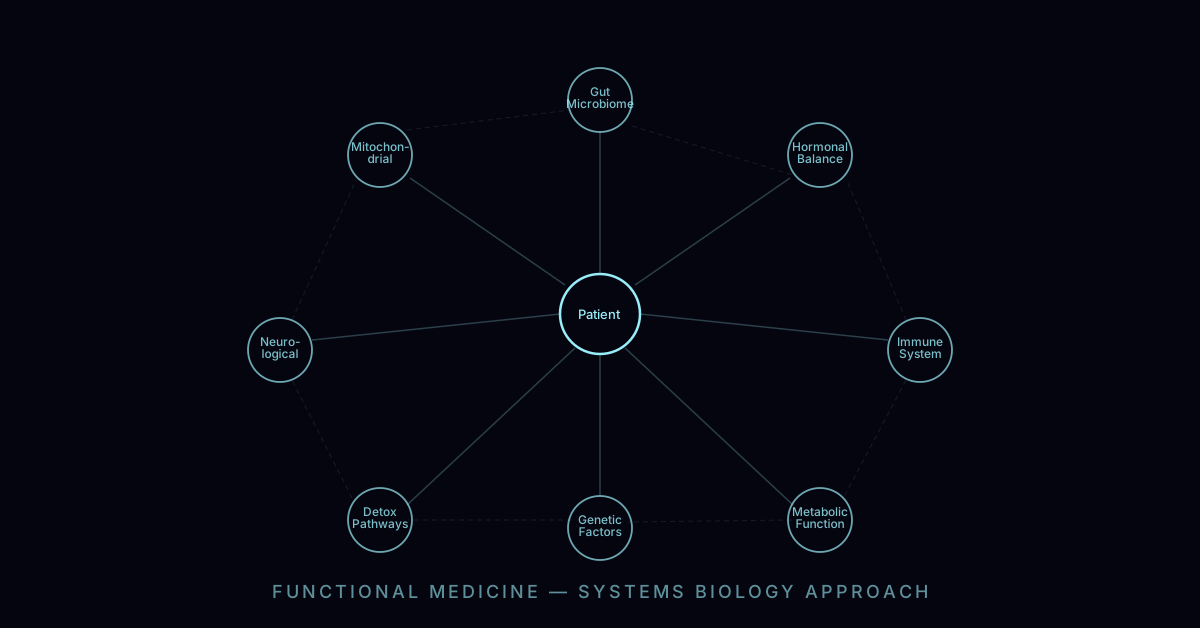
The functional medicine approach to ADHD is not a rejection of stimulant medication — it is a framework for addressing the modifiable biological factors that amplify the underlying neurobiological deficit. Ferritin, zinc, omega-3 status, sleep architecture, circadian alignment, and food additive load each contribute independently and additively to ADHD symptom severity. When these factors are systematically corrected, the required stimulant dose frequently decreases, medication efficacy improves, and side effect burden lessens — because the brain is no longer starting from a nutritionally and circadianly compromised baseline. For patients who remain on medication, a well-implemented functional protocol improves quality of life meaningfully. For patients who are borderline for medication initiation, it may be sufficient to reduce functional impairment to a manageable level without pharmacological intervention. The framework recognises ADHD as a condition in which both genetics and modifiable biology matter, and treats the biology as systematically as genetics has been studied — not with the expectation of a cure, but with the expectation that every modifiable amplifier identified and corrected represents a concrete improvement in the patient's daily experience.