What Is Berberine?
Berberine is a quaternary isoquinoline alkaloid found in the roots, rhizomes, and bark of several plants including Berberis vulgaris (barberry), Berberis aristata (Indian barberry), Coptis chinensis (goldthread), and Hydrastis canadensis (goldenseal). It has been used in Ayurvedic and Traditional Chinese Medicine for millennia, primarily for infectious diarrhea and gastrointestinal conditions — its original therapeutic application was antimicrobial, not metabolic.
The modern metabolic and longevity interest in berberine began in the early 2000s when Chinese researchers examining its mechanisms discovered its potent AMPK-activating properties, leading to a series of clinical trials comparing it to metformin for type 2 diabetes management. The research pipeline that followed has established berberine as one of the most extensively studied natural compounds for metabolic health, with over 2,000 published studies.
The Primary Mechanism: AMPK Activation
Berberine's primary metabolic mechanism is activation of AMPK (AMP-activated protein kinase) — the master energy sensor and regulator of cellular metabolism that is also activated by metformin, exercise, caloric restriction, and fasting. AMPK is activated when the intracellular AMP:ATP ratio rises (indicating low energy state) and in turn triggers a cascade of metabolic adaptations: increased glucose uptake in muscle (GLUT4 translocation), enhanced fatty acid oxidation, mitochondrial biogenesis, inhibition of mTORC1 (reducing anabolic processes that consume ATP), and activation of autophagy (cellular self-cleaning).
Berberine activates AMPK by inhibiting Complex I of the mitochondrial electron transport chain — partially reducing ATP production, which raises the AMP:ATP ratio and activates AMPK. This is also metformin's primary mechanism, explaining why the two compounds have such similar clinical effects. The AMPK → mTORC1 inhibition → autophagy activation cascade is particularly relevant for longevity: chronic mTORC1 elevation suppresses autophagy, allowing accumulation of damaged proteins and organelles that contribute to cellular ageing. Regular AMPK activation (from exercise, caloric restriction, or compounds like berberine and metformin) promotes the cellular maintenance programs that counteract this accumulation.
Clinical Evidence: Blood Glucose and HbA1c
The meta-analytic evidence for berberine's glycemic effects is robust. Yao et al. (2020), publishing in Frontiers in Endocrinology, systematically reviewed 46 randomized controlled trials enrolling 3,564 participants. Berberine at 0.9 to 1.5 g/day significantly reduced:
- Fasting blood glucose by an average of 1.10 mmol/L (19.8 mg/dL)
- HbA1c by an average of 0.70 percent
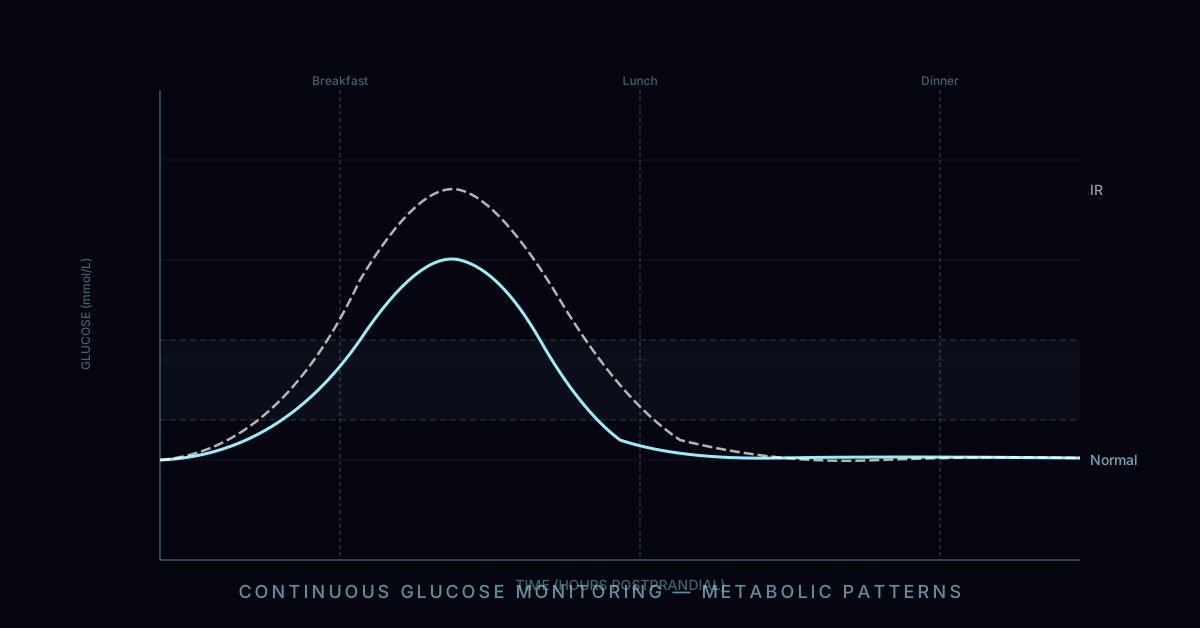
- 2-hour postprandial glucose by an average of 2.64 mmol/L (47.5 mg/dL)
- Fasting insulin by an average of 2.67 μIU/mL
These effect sizes are clinically meaningful and comparable to what is observed with metformin monotherapy. The reductions are most pronounced in individuals starting with higher baseline glucose and HbA1c, which is consistent with AMPK-mediated glucose disposal being most impactful in insulin-resistant states.
The Gut Microbiome Connection
Berberine has substantial effects on the gut microbiome composition — a finding that may explain some of its benefits and also contributes to understanding its poor oral bioavailability. Because berberine is poorly absorbed from the gut (~1% oral bioavailability), the majority of an oral berberine dose remains in the gut lumen where it directly modulates bacterial communities. Consistent findings across microbiome studies show berberine enriches health-associated bacteria — particularly Akkermansia muciniphila (associated with improved gut barrier function, insulin sensitivity, and in animal studies with extended healthspan and lifespan), Bifidobacterium, and Lactobacillus species — while reducing harmful species.
The Akkermansia connection is particularly interesting from a longevity perspective: Akkermansia muciniphila is reduced in obese individuals, type 2 diabetics, and the elderly, and its abundance has been inversely associated with metabolic disease. Rapamycin, metformin, and caloric restriction — three of the most robustly validated interventions for extending lifespan in model organisms — all increase Akkermansia abundance. Berberine's Akkermansia-enriching effect places it in compelling company mechanistically, though the leap from microbiome changes to human longevity outcomes remains to be demonstrated in clinical trials.
| Mechanism | Effect | Shared with |
|---|---|---|
| AMPK activation | Glucose uptake, fat oxidation, autophagy | Metformin, exercise, CR, rapamycin |
| PCSK9 inhibition | ↑ LDL receptor, ↓ LDL 20-30% | Evolocumab, alirocumab |
| Akkermansia enrichment | Gut barrier, insulin sensitivity | Metformin, rapamycin |
| mTORC1 suppression | Autophagy induction, anti-ageing | Rapamycin, CR, metformin |
The microbiome changes summarised in the table above represent both a mechanism of berberine's glycaemic effects and an independent secondary benefit. The increases in Akkermansia and Bifidobacterium are each independently associated with reduced intestinal permeability and lower lipopolysaccharide (LPS) translocation — the process by which endotoxins from gram-negative gut bacteria enter systemic circulation and drive low-grade systemic inflammation. This inflammatory LPS burden is a significant contributor to insulin resistance at the cellular level, particularly in liver and adipose tissue. The result is a virtuous cycle: berberine improves insulin sensitivity through direct AMPK activation AND through indirect, microbiome-mediated reduction of inflammatory LPS — two complementary mechanisms reinforcing the same metabolic outcome. The practical implication is that berberine is particularly well-suited to patients with metabolic syndrome who likely have both insulin resistance and gut dysbiosis, as these are two interconnected conditions that berberine addresses simultaneously. This breadth of effect contrasts meaningfully with metformin, which also improves Akkermansia populations (Shin et al., 2014, Gut) but does not produce the same breadth of favourable microbiome shifts seen with berberine in head-to-head microbiome comparisons — adding further mechanistic weight to berberine as a longevity-oriented insulin sensitiser.
PCSK9 Inhibition: Berberine's Cardiovascular Mechanism
Beyond AMPK activation, berberine has a second major pharmacological mechanism with important cardiovascular implications: inhibition of PCSK9 (proprotein convertase subtilisin/kexin type 9). PCSK9 is a hepatic protein that promotes the degradation of LDL receptors on liver cell surfaces — by binding to LDL receptors and directing them toward lysosomal degradation rather than recycling. When PCSK9 is active, LDL receptor density on hepatocytes falls, and circulating LDL rises. Berberine inhibits PCSK9 gene expression and protein secretion through upregulation of HNF-1α (hepatocyte nuclear factor 1α), which suppresses PCSK9 transcription. The result is increased LDL receptor density, increased hepatic LDL clearance from circulation, and LDL reductions of 20–30% in clinical trials — an effect mechanistically identical to pharmaceutical PCSK9 inhibitors (evolocumab, alirocumab), which achieve 50–60% LDL reductions at much greater potency.
The clinical significance: Yin et al. (2008, Metabolism) demonstrated that berberine 500mg twice daily produced LDL reductions of 23% and triglyceride reductions of 35% in hyperlipidaemic patients over 3 months. Because berberine and statins act through mechanistically distinct pathways — PCSK9 inhibition versus HMG-CoA reductase inhibition — they are theoretically and empirically additive. Several small trials confirm that berberine adds meaningful LDL reduction to statin therapy, making it clinically useful for patients whose LDL remains elevated despite maximally tolerated statin doses. For the substantial subset of patients with insulin resistance, elevated LDL, and elevated triglycerides — the metabolic syndrome triad — berberine's simultaneous AMPK activation and PCSK9 inhibition addresses multiple cardiovascular risk factors with a single intervention.
The combined metabolic profile distinguishes berberine from metformin: metformin's primary benefits are glycaemic (minimal independent lipid effects), while berberine improves glucose, insulin sensitivity, LDL, and triglycerides simultaneously. A 2015 network meta-analysis comparing 12 oral antidiabetic drugs on both glycaemic and lipid parameters placed berberine among the top performers on the composite of HbA1c reduction plus lipid improvement — a finding that explains the growing clinical interest in berberine as a first-line metabolic intervention for the full cardiometabolic risk cluster.
Dosing Protocol, Bioavailability, and Practical Use
Standard berberine HCl dosing is 500mg three times daily with meals (total 1,500mg/day) — the protocol used in the landmark Zhang 2008 metformin comparison and in most subsequent RCTs. This frequency is not arbitrary: berberine's oral bioavailability is approximately 1% from standard formulations, due to active intestinal efflux by P-glycoprotein (PGP) transporters that pump berberine back into the gut lumen before it can be absorbed. Taking berberine with food reduces PGP activity and slightly improves absorption. The three-times-daily dosing maintains more consistent plasma levels throughout the day, which is particularly important for postprandial glucose control across breakfast, lunch, and dinner.
Dihydroberberine (DHB), sold as Berbevis or as generic dihydroberberine, is a reduced form of berberine with approximately 5-fold greater oral bioavailability — it is absorbed more efficiently because it is a poor PGP substrate, then rapidly oxidised back to berberine in the intestinal wall and liver. For individuals who experience significant GI side effects with standard berberine (loose stools, nausea, bloating — the most common reason for discontinuation), DHB at 200–400mg/day provides equivalent or superior plasma berberine levels with substantially better tolerability. DHB is 3–5 times more expensive per dose, making cost-benefit assessment individual. Starting standard berberine at 500mg once daily and titrating to 1,500mg/day over 2–3 weeks reduces the GI side effect burden at initiation regardless of formulation.
Drug interactions require attention before combining berberine with pharmaceutical medications. The most important: (1) additive hypoglycaemia risk with antidiabetic medications including metformin, sulfonylureas, insulin, and GLP-1 agonists — monitor blood glucose carefully; (2) CYP3A4 and CYP2D6 inhibition can increase plasma levels of cyclosporin, many statins, benzodiazepines, and other substrates; (3) potential QT prolongation at high doses limits use alongside other QT-prolonging drugs. Contraindicated in pregnancy. Despite widespread marketing as "nature's metformin," these interactions are pharmacologically real and warrant physician review in patients on multiple medications.
Who Benefits Most from Berberine
Berberine's evidence-based use cases cluster around the metabolic syndrome triad: individuals with elevated fasting glucose or HbA1c (pre-diabetes or early T2DM), elevated LDL and/or triglycerides (particularly with low HDL), and insulin resistance (elevated HOMA-IR, elevated fasting insulin). In these individuals, the convergent AMPK activation, PCSK9 inhibition, gut microbiome reshaping, and mTORC1 suppression address multiple components of the underlying metabolic dysfunction simultaneously. Pre-diabetics seeking to prevent progression to T2DM without pharmaceutical therapy, PCOS patients requiring insulin sensitisation (see the PCOS article in this series), and patients with statin-intolerant hyperlipidaemia represent high-value use cases supported by the most direct trial evidence.
For longevity-focused individuals without metabolic disease, the case rests primarily on the AMPK→autophagy→mTORC1 pathway and the Akkermansia microbiome effects — both mechanistically compelling and supported by animal lifespan data, but without direct human longevity outcome trials. The TAME trial of metformin (a more potent AMPK activator) as a longevity intervention will provide relevant indirect evidence for this class of compounds within the next 2–3 years. Until then, berberine for longevity in metabolically healthy individuals is a mechanistically reasonable but evidence-incomplete bet. In individuals who already use metformin for metabolic reasons, adding berberine is generally not recommended as the combination carries additive hypoglycaemia risk without clear additional benefit beyond metformin monotherapy at optimised doses.