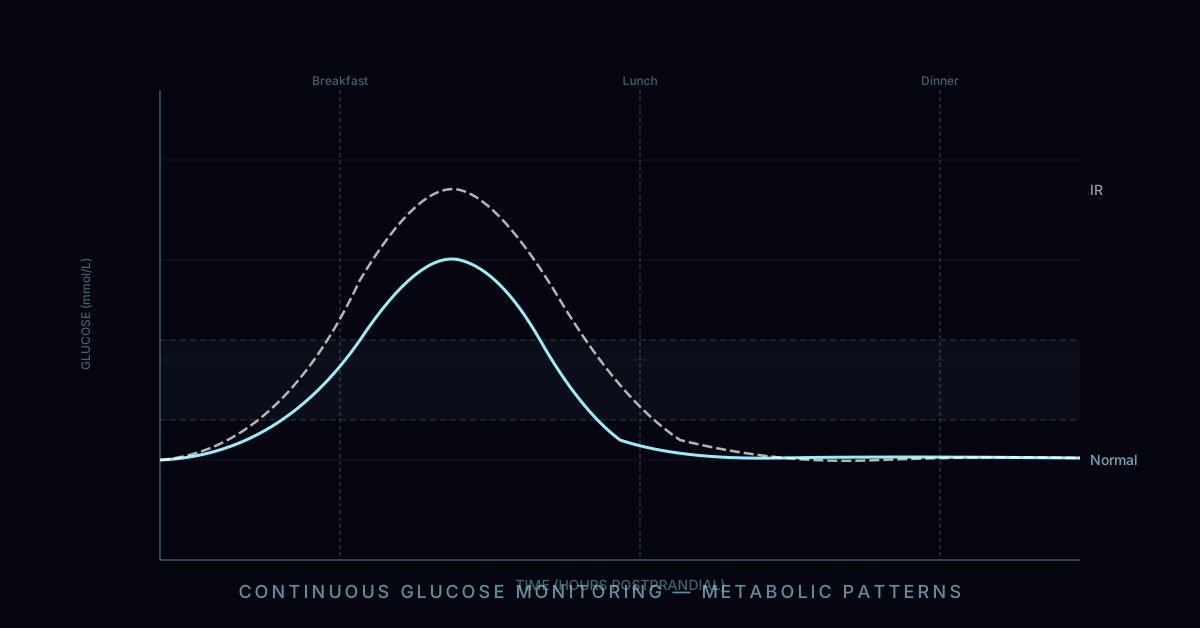
Continuous glucose monitoring (CGM) spent its first two decades almost entirely in the domain of diabetes management. That changed around 2018–2020 when a wave of non-diabetic athletes, executives, and biohackers began wearing CGM sensors to understand how their glucose dynamics correlated with performance, energy, and recovery. Companies like Levels Health, Supersapiens, and January AI built platforms specifically for this use case. What does the evidence actually show, and is the data actionable for athletic performance?
Why Glucose Matters for Athletic Performance
Glucose is the primary fuel substrate for high-intensity exercise. The brain requires approximately 130g of glucose per day at rest; during intense exercise, skeletal muscle glucose uptake increases 7–20 fold. The total body glycogen store — glucose stored in muscle and liver — amounts to roughly 400–500g (1,600–2,000 kcal) in a trained athlete.
The physiological phenomenon athletes call "bonking" or "hitting the wall" — the sudden, dramatic decline in performance experienced by endurance athletes typically after 60–90 minutes of sustained effort — is largely a consequence of glycogen depletion. When muscle glycogen approaches exhaustion, the body is forced to rely increasingly on fat oxidation, which produces ATP significantly more slowly. The result is a metabolic power ceiling that feels like a wall.
CGM doesn't measure glycogen — it measures blood glucose. But blood glucose dynamics are a window into glycogen utilization rates, refueling effectiveness, and insulin response patterns that collectively determine how well you manage energy across training and competition.
Pre-Training Glucose Optimization
Sports physiology research and CGM-based athlete data consistently point to the same optimal pre-training glucose window: 80–100 mg/dL. This range provides sufficient glucose availability without triggering the reactive hypoglycemia that can occur when you begin exercise with elevated glucose (120+ mg/dL) and insulin sensitivity rapidly increases at exercise onset, causing blood glucose to drop precipitously in the first 15–20 minutes.
Practical implications for athletes who use CGM to optimize pre-workout nutrition:
- Timing matters: A high-glycemic meal 30 minutes before training can produce a spike and subsequent drop that leaves you hypoglycemic at the 20-minute mark of your workout
- Lower-glycemic carbohydrates eaten 90–120 minutes pre-workout tend to produce more stable glucose in the training window
- Fasted training (common glucose of 65–80 mg/dL) is viable for aerobic work below ~65% VO2max but degrades performance in high-intensity intervals and resistance training
- The 80–100 mg/dL sweet spot is best achieved with a meal 2–3 hours before training, or a small mixed meal (protein + complex carbohydrate) 60–90 minutes before
How the pre-training glucose targets translate into practical nutrition timing requires nuance. The 70–140 mg/dL window is not a rigid target but a zone that minimizes both hypoglycemic performance impairment and excessive insulin suppression of fat oxidation. The key lever is carbohydrate timing relative to training: consuming 30–40g carbohydrates 30–45 minutes before session start predictably raises CGM readings by 20–40 mg/dL in non-diabetic athletes, which can move glucose into or out of the optimal range depending on starting point. Elite endurance athletes in fat-adapted states often perform well at 70–90 mg/dL — the lower end of the range — reflecting improved fat oxidation efficiency that reduces their dependence on exogenous glucose for aerobic intensities. The practical value of CGM here is exactly this: it provides individualized data to find the personal optimum within the 70–140 mg/dL zone rather than applying a population average target that may be meaningfully wrong for a specific athlete's physiology.
The 15-Minute Lag Problem
A critical technical limitation for CGM use during exercise: CGM sensors measure interstitial fluid glucose, not blood glucose. There is an inherent 15–20 minute lag between blood glucose changes and the reflected CGM reading. During rapidly changing conditions — exercise onset, refueling mid-workout, high-intensity intervals — this lag means the CGM reading describes where you were 15 minutes ago, not where you are now.
For pre-workout planning and post-workout analysis, the lag is irrelevant. For real-time fueling decisions during endurance events, it's significant. Supersapiens addressed this by partnering with Abbott to produce the Libre Sense Glucose Sport Biosensor, a CGM variant with improved calibration for the exercise context and app guidance that accounts for the lag algorithmically. Even with these adjustments, mid-race CGM readings require interpretation with the lag in mind.
Intra-Workout Fueling Strategy by Exercise Type
CGM research has helped refine intra-workout fueling recommendations by exercise modality:
Endurance running and cycling (90+ minutes): Glucose typically drops 20–40 mg/dL in the first 45 minutes, stabilizes if fueling is adequate, and can drop further if under-fueled. CGM data supports the traditional sports nutrition guideline of 30–60g carbohydrate/hour for efforts exceeding 90 minutes, but personalizes the timing — some athletes need carbohydrate at the 45-minute mark; others can extend to 60 minutes based on their individual glucose decline rate.
Ultraendurance (marathon, ultramarathons, Ironman): Glucose management becomes even more critical as glycogen stores are severely depleted and fat oxidation capacity limits sustainable pace. Elite ultraendurance athletes typically maintain glucose in the 70–90 mg/dL range during sustained efforts by continual carbohydrate intake. CGM data in marathon populations shows dramatic variability: some runners maintain 80–100 mg/dL through miles 20–26 with adequate fueling; others drop to 55–65 mg/dL despite conventional fueling protocols, explaining why some athletes "wall" despite following standard guidance.
High-intensity interval training (HIIT) and CrossFit: Counterintuitively, glucose often rises during very high-intensity intervals due to catecholamine (adrenaline) release stimulating glycogenolysis — the liver dumps glucose into the bloodstream as part of the fight-or-flight response. This can produce CGM spikes of 130–160 mg/dL during Tabata intervals or heavy metcons even without any carbohydrate intake. Understanding this pattern prevents athletes from misinterpreting high-intensity exercise glucose spikes as dietary glucose responses.
Post-Workout Glycogen Replenishment
The 30–60 minutes immediately following glycogen-depleting exercise represents the optimal window for carbohydrate replenishment. Muscle GLUT4 transporters are upregulated and translocated to the cell membrane during exercise and for ~30–60 minutes after, allowing glucose uptake without significant insulin signaling — meaning carbohydrates consumed in this window are preferentially directed to glycogen replenishment rather than fat storage or blood glucose elevation.
CGM data validates this window empirically: athletes who consume 30–60g of high-glycemic carbohydrate within 30 minutes of glycogen-depleting exercise show faster glucose normalization and lower post-exercise glucose variability in subsequent meals compared to athletes who delay post-workout carbohydrate intake by 90+ minutes.
The Levels Health and Supersapiens Research Base
Two companies have done the most to build an evidence base for non-diabetic CGM use in performance contexts. Levels Health (founded by Dr. Casey Means) published internal analysis showing that ~70% of self-selected users improved time-in-range (a metric borrowed from diabetes management, typically 70–140 mg/dL for non-diabetics) over their first 30 days of CGM use, primarily through meal timing and composition changes rather than total caloric changes.
Supersapiens partnered with Team Jumbo-Visma's professional cycling team and published data showing that CGM-guided race fueling improved glucose stability in simulated race conditions compared to conventional fueling protocols. Professional cyclists reported more consistent energy perception during long stages when following CGM-informed fueling strategies.
Best CGM Devices for Athletes in 2026
Two devices dominate the non-diabetic athletic CGM market:
Dexterity G7: 10-day wear, no calibration required, Bluetooth streaming to phone. The G7 introduced a significantly smaller transmitter than G6 and improved startup time (30 minutes vs 2 hours). Most compatible with third-party athletic performance apps. Requires prescription in the US, obtained through companies like Levels Health or Supersapiens.
Abbott Libre 3: 14-day wear, real-time streaming (1-minute intervals, unlike the scan-based original Libre), smaller profile than Dexterity sensors, and now FDA approved for non-diabetic wellness use in some configurations. The Libre Sense Sport variant has improved exercise-context calibration.
Time-in-Range as a Performance Predictor
Time-in-range (TIR) — the percentage of time glucose stays in the 70–140 mg/dL window for non-diabetics — is emerging as a performance and health composite metric. Studies in Type 1 diabetic athletes show strong correlations between higher TIR and better race outcomes. In non-diabetic athletes, preliminary data from Levels Health's research cohort suggests athletes with TIR above 90% report higher energy consistency, better sleep quality, and fewer training sessions disrupted by energy crashes.
Interpreting TIR for athletes: typical non-diabetic adults have TIR of 93–97% at rest. Intensive training blocks may temporarily drop TIR due to exercise-induced glucose swings; this is expected and not pathological. Persistent TIR below 85% outside of training warrants investigation of dietary patterns and insulin sensitivity.
Who Benefits Most from CGM
CGM provides the highest return for endurance athletes competing in events exceeding 60–90 minutes (where glycogen management is performance-limiting), athletes who experience energy crashes or inconsistent energy during training, individuals trying to optimize body composition while maintaining training quality, and anyone with a family history of Type 2 diabetes who wants early insight into glucose regulation trends. Strength athletes training for hypertrophy benefit less dramatically, though post-workout nutrient timing and pre-workout glucose optimization remain relevant.
The counterpoint to the enthusiasm matters: for recreational athletes exercising 3–5 hours per week at moderate intensity without metabolic dysfunction, CGM adds limited value over consistent food journaling and subjective performance tracking. The cost-benefit case strengthens meaningfully with four specific conditions: (1) training volume exceeding 10 hours per week, where glycogen management becomes race-critical; (2) events lasting more than 2 hours, where bonking risk is real; (3) presence of insulin resistance or pre-diabetes, where CGM serves both performance and metabolic health goals simultaneously; and (4) persistent fatigue or performance plateaus despite adequate training loads and nutrition, which may signal hidden glycemic patterns. For these populations, 4–8 weeks of CGM data can unlock individualized nutrition patterns — optimal meal timing, pre-workout fueling windows, post-workout refueling responses — that are genuinely difficult to identify from subjective assessment alone.