What Is Exercise Snacking?
Exercise snacking refers to brief, frequent bouts of physical activity — typically 2 to 10 minutes — distributed throughout the day. Unlike traditional exercise models that emphasize continuous structured sessions of 30 to 60 minutes, exercise snacking reframes physical activity as something to be woven into ordinary daily life: a walk around the block after lunch, a staircase climb before a meeting, 10 body weight squats at a desk.
The concept emerged from exercise physiology research examining the harms of prolonged sitting. Studies throughout the 2010s demonstrated that even highly active individuals who met standard physical activity guidelines but spent most of their non-exercise time sitting showed metabolic abnormalities — including elevated postprandial glucose and triglycerides, reduced lipoprotein lipase activity, and increased inflammatory markers — that were not fully reversed by their structured exercise sessions. Breaking up sitting with brief movement interruptions emerged as an intervention distinct from, and complementary to, traditional exercise.
The Blood Glucose Mechanism: Why Timing Matters
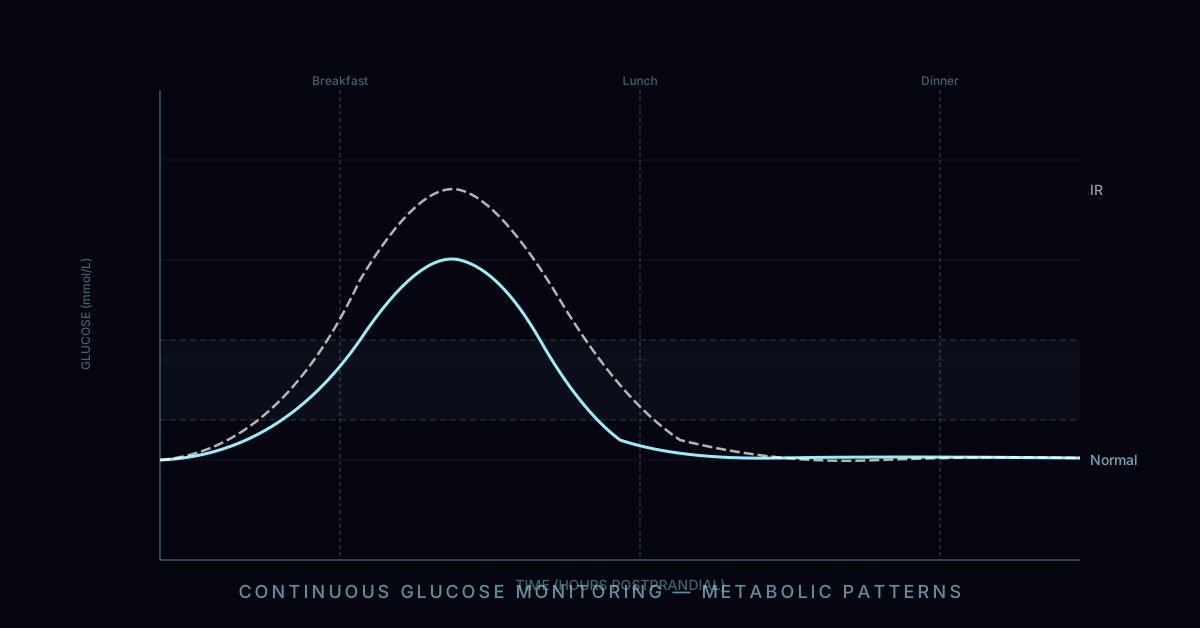
When you eat a carbohydrate-containing meal, glucose is absorbed from the gut into the bloodstream, causing blood glucose to rise. Insulin is released from the pancreas in response, signaling cells — primarily skeletal muscle and fat tissue — to take up glucose from the blood. In healthy individuals, blood glucose peaks approximately 30 to 90 minutes after eating and returns to near-fasting levels within 2 hours. In individuals with insulin resistance, pre-diabetes, or type 2 diabetes, this postprandial glucose excursion is exaggerated and prolonged.
Skeletal muscle is responsible for approximately 70 to 80 percent of insulin-stimulated glucose disposal. Critically, muscular contraction activates glucose uptake through an entirely separate, insulin-independent pathway: AMPK (AMP-activated protein kinase) activation causes GLUT4 transporter translocation to the muscle cell membrane, opening a glucose entry channel that operates regardless of insulin signaling. This is the mechanism by which exercise lowers blood glucose even in individuals with severely impaired insulin action.
Timing post-meal walking to coincide with the glucose absorption period (approximately 30 to 90 minutes after eating) means that contracting leg muscles — the largest skeletal muscle mass in the body — are activated precisely as blood glucose is rising from the meal, creating an immediate glucose sink that blunts the postprandial spike.
The Key Research: What the Studies Show
Dempsey et al. (2016), publishing in Diabetologia, conducted one of the most cited studies in this area. Twenty-three adults with insulin resistance or type 2 diabetes risk factors were studied under three conditions in a crossover design: uninterrupted sitting for 9 hours; sitting interrupted with 3 minutes of light-intensity walking every 30 minutes; and sitting interrupted with 3 minutes of simple resistance exercises (half-squats, calf raises, knee raises) every 30 minutes. Both interruption conditions significantly reduced postprandial glucose and insulin compared to uninterrupted sitting, with glucose reductions of 24 percent (walking) and 30 percent (resistance exercises). The resistance exercise interruptions were actually slightly superior for glucose control.
Henson et al. (2016, Diabetes Care) confirmed these findings in a separate cohort, also demonstrating reductions in postprandial glucose and insulin with activity breaks every 30 minutes. Subsequent studies have examined the dose-response relationship: Buffey et al. (2022, Sports Medicine) found that 2-minute walks provided measurable benefit and 10-minute walks provided optimal reduction, with diminishing incremental returns beyond 10 minutes.
CGM (continuous glucose monitoring) data from non-diabetic individuals provides particularly compelling visual evidence. In CGM users who wore devices while testing post-meal walking, a 10-minute walk after dinner consistently reduced the postprandial glucose peak by 20 to 40 percent compared to sitting, often preventing any spike above 120 mg/dL (6.7 mmol/L) from meals that would otherwise reach 140 to 160 mg/dL (7.8 to 8.9 mmol/L).
Walking vs. Resistance Exercise Micro-Bouts
Both walking and brief resistance exercise bouts after meals effectively reduce postprandial glucose, but through slightly different mechanisms. Walking primarily recruits slow-twitch type I fibers in the legs, which have high oxidative capacity and glucose transporter density. Resistance exercise micro-bouts (squats, calf raises, resistance band work) recruit a broader spectrum of muscle fiber types including fast-twitch type IIa fibers that have large GLUT4 pools and can rapidly import substantial glucose when activated.
Climie et al. (2018) and Dempsey et al. (2016) both found resistance exercise interruptions were modestly superior to walking for acute postprandial glucose reduction, likely because resistance exercises engage a larger total muscle mass per unit time. However, walking is more accessible, requires no equipment, and confers additional cardiovascular and mental health benefits. For practical purposes, the best choice is whichever can be performed consistently.
| Intervention | Duration | Glucose Reduction vs Sitting | Accessibility |
|---|---|---|---|
| Post-meal walk (light pace) | 10 min | ~24–30% | High — no equipment |
| Resistance micro-bouts (squats, calf raises) | 3 min every 30 min | ~28–35% | High — no equipment |
| Brief walk (2 min) | 2 min | ~10–15% | Very high |
| Standing only (no movement) | Any | ~5–10% | High with standing desk |
The ~5–10% glucose reduction from standing alone is real but modest — the activation of postural muscles from standing is insufficient to drive meaningful GLUT4 translocation. The key insight is that any skeletal muscle contraction is dose-dependent for glucose uptake, which is why even 2 minutes of walking produces a measurable 10–15% reduction. The practical hierarchy is: resistance micro-bouts ≈ walking (similar magnitude, different mechanisms) > brief walks > standing > sitting. For people with type 2 diabetes or prediabetes, combining all three habits — a 10-minute walk after the largest meal, brief resistance bouts during seated work, and a standing desk for passive benefit — can produce reductions in postprandial area under the glucose curve (AUC) comparable to a dose of metformin, without any pharmacological intervention.
Practical Implementation: The Post-Meal Protocol
The simplest and most evidence-supported protocol for blood glucose control via exercise snacking is a 10-minute walk within 30 minutes of completing each main meal. At three meals per day, this amounts to 30 minutes of distributed walking daily — achievable for most working adults even in office environments.
For those unable to walk after meals, desk-based resistance exercises provide similar or greater benefit: 10 squats, 10 calf raises, and 10 seated knee raises every 30 minutes during seated work captures much of the glucose-lowering effect of post-meal walking. Resistance bands kept at a workstation facilitate this practice.
For individuals using CGMs who want to observe the effect directly, the experiment is straightforward: eat an identical meal on consecutive days, sit after one and walk for 10 minutes after the other. The glucose profile difference will be visible and typically dramatic — one of the most striking and actionable demonstrations of food-exercise interaction available to consumers today.