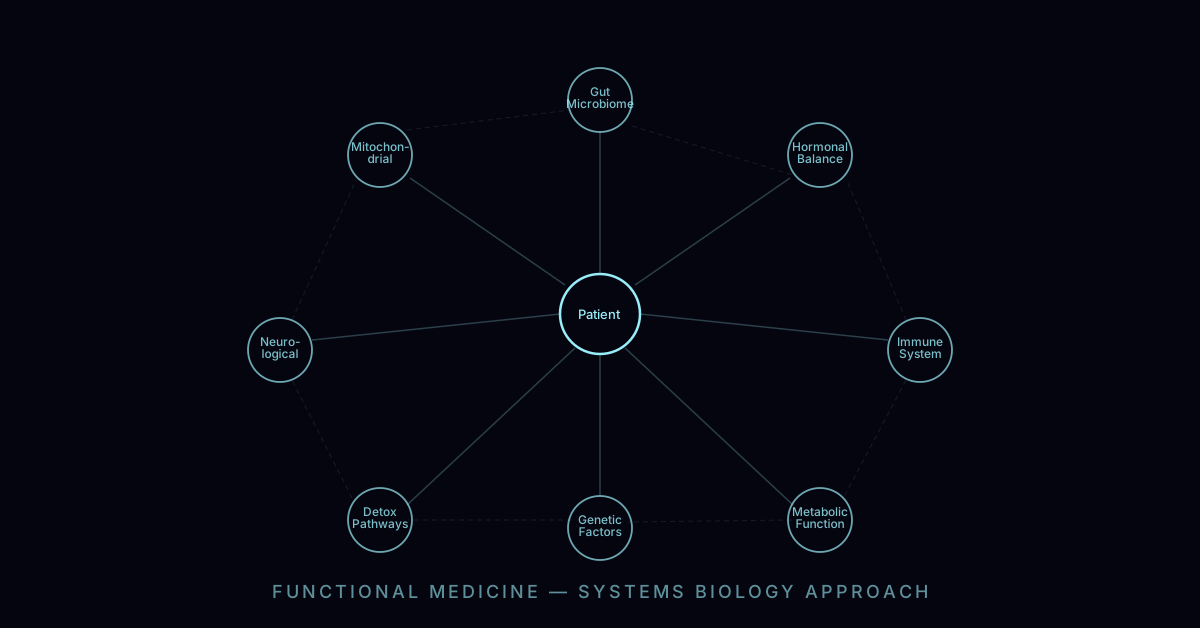
Why Hypertension Demands More Than a Prescription
Hypertension affects approximately 1.28 billion adults worldwide (WHO 2023) and is the leading attributable cause of premature death globally, responsible for approximately 7.5 million deaths per year through stroke, myocardial infarction, heart failure, chronic kidney disease, and peripheral artery disease. Despite effective pharmacotherapy, blood pressure control rates in treated hypertensive patients remain below 50% in most countries — reflecting both the complexity of blood pressure physiology and the inadequacy of single-agent pharmacological approaches.
The lifestyle determinants of blood pressure — diet, physical activity, body composition, stress physiology, sleep, alcohol, and sodium intake — collectively produce changes in SBP that can match or exceed those of first-line pharmacotherapy. A comprehensive lifestyle approach is not merely complementary to medication; for stage 1 hypertension (SBP 130–139, DBP 80–89) without established cardiovascular disease, it is the guideline-recommended first-line intervention.
The DASH Diet: First-Line Dietary Evidence
The DASH (Dietary Approaches to Stop Hypertension) diet has the most robust clinical trial evidence of any dietary pattern for blood pressure reduction. The original 1997 NEJM trial by Appel et al. demonstrated an 11.4 mmHg SBP reduction with the full DASH pattern compared to a Western control diet over 8 weeks — comparable to first-line antihypertensive drug monotherapy.
The full DASH diet provides approximately 4700mg potassium, 500mg magnesium, and 1240mg calcium daily — all from whole food sources — while limiting sodium to 2300mg/day and saturated fat. The DASH-Sodium trial (Sacks et al., NEJM 2001) demonstrated additive effects: combining DASH with 1500mg/day sodium restriction produced SBP reductions of up to 11.5 mmHg in hypertensive individuals — establishing the combination as the most potent dietary approach tested in RCTs.
In practice, the most impactful specific changes within DASH are: increasing vegetable and fruit intake (the potassium effect), replacing sodium chloride with potassium-enriched salt substitutes (the sodium:potassium ratio effect, directly validated in the 2021 NEJM China trial of 20,995 participants), and reducing ultra-processed food consumption (the dominant source of excess dietary sodium in modern diets).
Exercise: The Three Modalities
Aerobic Exercise
The Cornelissen and Smart 2013 meta-analysis of 93 RCTs found aerobic exercise reduced SBP by 3.5 mmHg overall and 6.9 mmHg in hypertensive individuals. The mechanism is multifactorial: reduced sympathetic tone (lower resting heart rate and lower norepinephrine), improved endothelial nitric oxide production (aerobic training upregulates eNOS), reduced arterial stiffness (measurable as improved carotid-femoral pulse wave velocity), and weight-independent effects on cardiac output and peripheral resistance. The dose required: ≥150 minutes per week of moderate-intensity aerobic exercise. Effects on blood pressure appear within 4 weeks of regular training.
High-Intensity Interval Training (HIIT)
A 2019 meta-analysis of 27 HIIT RCTs found SBP reductions of 4.08 mmHg — comparable to or slightly superior to moderate continuous training, achievable in less total time. A standard HIIT protocol (10 × 1-minute high-intensity intervals with 1-minute recovery, 3 times per week) requires 30 minutes per session and appears to produce blood pressure benefits primarily through enhanced endothelial function and improved arterial compliance.
Isometric Exercise
Perhaps the most underappreciated modality: isometric resistance exercise (sustained static muscle contractions, most commonly wall squats or handgrip) produces substantial blood pressure reductions. The 2023 meta-analysis by Edwards et al. (British Journal of Sports Medicine) of 270 RCTs comparing exercise modalities found isometric exercise produced the largest SBP reduction (−8.24 mmHg) of any exercise type. Protocol: 4 × 2-minute wall squats at ∼60 degrees of knee flexion, with 2-minute rest periods, 3 times per week. The mechanism involves sustained baroreceptor activation and long-lasting post-exercise sympathoinhibition.
Stress Reduction: The Autonomic Pathway
Chronic psychological stress elevates blood pressure through sustained sympathetic nervous system activation — increased cardiac output, increased peripheral vascular resistance, and reduced renal sodium excretion mediated by catecholamine-driven renin release. HRV biofeedback and MBSR both reduce sympathetic tone and improve parasympathetic modulation, with demonstrated blood pressure effects.
A 2019 meta-analysis of mindfulness-based interventions (Shi et al., Journal of Hypertension) found significant SBP reductions averaging −4.26 mmHg with 8-week MBSR. Slow deep breathing (6 breaths per minute, 4-second inhale, 6-second exhale) produces acute blood pressure reductions through the Valsalva mechanism and baroreceptor stimulation — the RESPeRATE device was FDA-cleared for hypertension specifically based on this mechanism. Daily practice of 15 minutes of slow deep breathing produces reductions of 3–5 mmHg in sustained clinical trials.
Supplements with Clinical Evidence
The supplements with the most consistent clinical evidence for blood pressure reduction are summarised below. These are adjuncts to, not replacements for, the dietary and exercise interventions above.
| Supplement | Dose | SBP Reduction | Evidence Level |
|---|---|---|---|
| Magnesium glycinate | 400mg/day | −2.0 mmHg (meta-analysis 34 RCTs) | Strong |
| Potassium chloride | 1.5–3g/day | −4.25 mmHg (Cochrane review) | Strong |
| CoQ10 | 100–200mg/day | −3.7 mmHg (meta-analysis) | Moderate |
| Aged garlic extract | 600–1200mg/day | −9.3 mmHg (meta-analysis, hypertensives) | Moderate |
| Omega-3 (EPA+DHA) | 2–3g/day | −2.0 mmHg (Cochrane 2022) | Strong |
An important caveat for interpreting these effect sizes: the −2 to −9 mmHg figures are averages from populations that include individuals across all baseline levels. Effects are consistently larger in people with documented deficiencies — magnesium and potassium supplementation in deficient individuals produces reductions roughly two to three times the meta-analytic average. Higher baseline blood pressure also amplifies response: someone with an SBP of 155 mmHg typically sees a larger absolute reduction than someone at 130 mmHg. When multiple deficiencies co-exist — as is common in individuals eating a Western diet (low magnesium, low potassium, low omega-3) — combining the relevant supplements from this list produces additive rather than overlapping effects. Finally, the magnesium in the DASH diet (legumes, leafy greens, nuts, whole grains) provides the same physiological benefit as a magnesium supplement at substantially lower cost, reinforcing that these supplements complement but do not replace the dietary interventions described above.
The Combined Lifestyle Effect: How Much Can You Achieve?
When all lifestyle modifications are implemented comprehensively and consistently, the combined blood pressure reduction can reach 20–30 mmHg in individuals with stage 2 hypertension — a magnitude that exceeds single-agent pharmacotherapy and approaches dual-drug therapy. This is not theoretical: lifestyle intervention trials in motivated populations with high adherence consistently demonstrate these reductions. The reality of clinical practice is that long-term adherence is difficult to achieve without structured support, which is precisely where health platforms and personalised coaching add clinical value. Even partial implementation — the DASH diet alone, or adding 150 minutes of aerobic exercise per week — produces clinically meaningful reductions that reduce medication burden and cardiovascular event risk.
Knowing when lifestyle alone is insufficient matters as much as knowing what lifestyle changes to make. Stage 2 hypertension (SBP ≥160 mmHg) and established cardiovascular disease — prior myocardial infarction, stroke, or heart failure — require antihypertensive medication alongside lifestyle modification, not instead of it. Starting medication during an intensive lifestyle program is not a concession of failure; it is appropriate risk reduction while the slower-acting behavioral changes accumulate their effect. The long-term goal is to use sustained lifestyle improvements to reduce medication burden over time, potentially allowing a physician to step down the dose or number of agents. Do not stop or reduce antihypertensive medication without medical supervision even when lifestyle results have been substantial — blood pressure frequently rebounds on discontinuation, sometimes to levels higher than the pre-treatment baseline, and the decision to step down medication requires clinical monitoring of the response.