Reframing Psoriasis: A Systemic Disease with Skin Manifestations
Psoriasis is one of the most common immune-mediated inflammatory diseases globally, affecting approximately 2–3% of the world's population — around 125 million people. It is also one of the most misunderstood in terms of its systemic consequences. The classic presentation — well-demarcated, erythematous, silvery-scaled plaques on extensor surfaces, scalp, and sacrum — naturally frames it as a skin disease. But this framing is clinically incomplete and has led generations of physicians to treat only the visible manifestation while leaving the systemic inflammatory driver unaddressed.
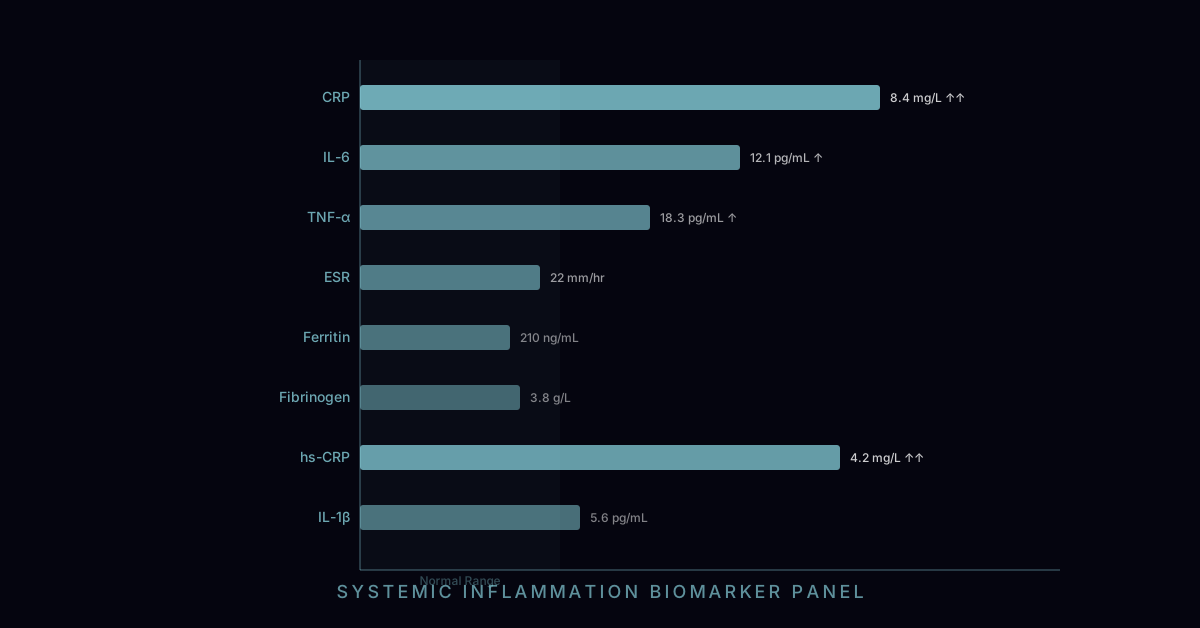
The psoriasis patient is not merely inconvenienced by uncomfortable skin. They carry approximately 2–3 times the cardiovascular mortality risk of age-matched controls, substantially elevated rates of metabolic syndrome, diabetes, and non-alcoholic fatty liver disease, a 20–30% lifetime risk of psoriatic arthritis causing destructive joint disease, and significantly elevated rates of depression and anxiety. All of these comorbidities are driven by the same cytokine milieu — IL-17A, IL-23, TNF-α — that drives the skin lesion. Treating the skin without reducing the systemic inflammation is inadequate for most patients with more than mild disease.
The Immunology: Th17 Drives the Disease
The immunological characterisation of psoriasis has been transformed over the past 20 years. The original Th1-dominant model has been superseded by the recognition that Th17 cells — producing IL-17A, IL-17F, and IL-22 — are the primary drivers of psoriatic inflammation. IL-23 (produced by dermal dendritic cells and macrophages in response to innate immune activation) is the upstream cytokine that drives Th17 differentiation and survival, making the IL-23/Th17 axis the most therapeutically productive target in modern psoriasis treatment.
IL-17A acts on keratinocytes to dramatically upregulate their proliferation rate (from the normal 14-day epidermal turnover to as little as 2–3 days in lesional psoriatic skin) and to drive production of further inflammatory mediators (antimicrobial peptides, chemokines that recruit more neutrophils and T cells). The thickened, scaling plaques result from this hyperproliferation combined with incomplete differentiation and the massive inflammatory infiltrate of T cells, neutrophils, and dendritic cells visible on histology.
The Gut-Skin Axis in Psoriasis
The evidence for gut microbiome involvement in psoriasis pathogenesis has grown substantially since the landmark Scher et al. 2015 eLife paper demonstrated specific microbiome differences in psoriasis and psoriatic arthritis patients. Key findings include:
- Reduced gut microbial diversity in psoriasis (diversity is the cardinal marker of a healthy microbiome)
- Specific depletion of Akkermansia muciniphila and butyrate-producing Firmicutes
- Elevated serum LPS-binding protein and zonulin (increased gut permeability) in psoriasis patients
- 3–5 times elevated rate of Crohn's disease in psoriasis patients (shared genetic loci and shared cytokine pathways)
The proposed mechanism: gut dysbiosis and increased intestinal permeability allow bacterial LPS to enter the systemic circulation (metabolic endotoxaemia). Circulating LPS activates TLR4 on skin dendritic cells and keratinocytes, amplifying the Th17 immune response and potentially maintaining the chronic activation that characterises psoriasis. This provides a theoretical but biologically plausible rationale for gut-directed interventions in psoriasis management.
Dietary Interventions: Omega-3, Gluten, and Weight
The dietary interventions with the strongest evidence for psoriasis are:
Omega-3 fatty acids: EPA and DHA compete with arachidonic acid for cyclo-oxygenase and 5-lipoxygenase enzymes, reducing the pro-inflammatory leukotriene B4 and PGE2 that are elevated in psoriatic skin. Multiple RCTs and a 2014 meta-analysis confirm significant PASI reductions with ≥3g/day EPA+DHA supplementation. This should be a standard adjunct recommendation for all psoriasis patients.
Gluten-free diet in AGA-positive patients: Testing for anti-gliadin antibodies (AGA) identifies a subgroup of psoriasis patients likely to respond to gluten elimination. Seropositive patients show significantly greater PASI improvement with strict gluten-free diet. All patients with psoriasis should be tested for coeliac disease (anti-tTG IgA) and AGA.
Weight loss in overweight/obese patients: Adipose tissue is a source of pro-inflammatory cytokines (IL-6, TNF-α, leptin) that amplify psoriatic inflammation. A 2016 RCT found 48% PASI reduction with caloric restriction vs 25% in controls at equivalent medication doses — and obese psoriasis patients show markedly improved biologic response after significant weight loss.
Vitamin D: The Under-Recognised Deficiency
All psoriasis patients should have serum 25(OH)D measured. The evidence for vitamin D deficiency in psoriasis is consistent across 19 cross-sectional studies and a 2018 meta-analysis (Gisondi et al.) confirming significantly lower vitamin D levels in psoriasis patients versus controls. The therapeutic rationale is strong: calcipotriol (topical vitamin D3 analogue) is a first-line treatment for plaque psoriasis, and its anti-proliferative and immunomodulatory effects on keratinocytes are well-characterised. Systemic supplementation to achieve optimal levels (50–60 ng/mL) is low-risk and addresses a common deficiency with direct mechanistic relevance. Vitamin D3 supplementation of 4,000–6,000 IU/day is typically needed to reach optimal levels in deficient patients.
The immunological rationale for vitamin D in psoriasis extends beyond keratinocyte effects. Calcitriol (the active form, 1,25-dihydroxyvitamin D3) directly suppresses Th17 differentiation by inhibiting IL-17 and IL-22 production, and promotes regulatory T cell (Treg) expansion — increasing the population of immune cells that suppress autoimmune activity. This dual action — reducing the pro-inflammatory Th17 arm while enhancing the regulatory Treg arm — addresses the core immunological imbalance driving psoriasis. A dose-response relationship between vitamin D status and psoriasis severity has been documented in multiple studies, and several small RCTs have found significant PASI improvements with oral vitamin D3 supplementation, though effect sizes are modest in isolation and most robust when combined with other interventions.
Vitamin D co-factors matter: vitamin D3 supplementation is most effective when accompanied by adequate vitamin K2 (MK-7, 100–200mcg/day) to direct calcium appropriately, and magnesium (which is a cofactor for both vitamin D hydroxylation steps — hepatic 25-hydroxylation and renal 1α-hydroxylation). Many patients are magnesium-deficient and cannot fully activate vitamin D despite adequate supplementation. Magnesium glycinate at 300–400mg/day covers both the vitamin D activation cofactor requirement and has independent anti-inflammatory effects through nuclear factor kappa-B pathway modulation.
Stress Management: The Underestimated Therapeutic Target
Psychological stress is one of the most consistently reported and mechanistically understood psoriasis flare triggers, cited by 40–80% of patients in population surveys. The neuroimmune pathways are well characterised: cortisol from HPA axis activation initially suppresses immunity but with chronic stress produces glucocorticoid resistance in immune cells, paradoxically amplifying the Th17 response rather than damping it. Sympathetic nervous system activation releases norepinephrine that acts on β2-adrenergic receptors on keratinocytes and T cells, lowering the threshold for psoriatic inflammation. Cutaneous sensory nerve endings release substance P and CGRP in response to psychological stress, activating local mast cells and keratinocytes — the neurogenic skin inflammation pathway that explains the Koebner phenomenon (psoriasis appearing at sites of physical or psychological trauma).
The therapeutic evidence is direct. Kabat-Zinn et al. (2004) randomised psoriasis patients receiving phototherapy to mindfulness meditation audio or usual care. Patients receiving mindfulness instruction achieved clinical clearance four times faster than controls — a biological effect of psychological intervention on skin inflammation confirmed in a controlled trial, not merely an association. Regular aerobic exercise reduces psoriasis severity independently of weight loss (through anti-inflammatory cytokine modulation and cortisol regulation), with a 2020 meta-analysis (Medeiros et al.) finding significant PASI reductions in psoriasis patients who exercised compared to sedentary controls. Sleep quality is a significant independent modulator of psoriasis: sleep deprivation elevates IL-17 and IL-6 the following day; shift workers and chronic insomniacs have substantially higher psoriasis severity scores than regular sleepers.
When Biologics Are Necessary
For moderate-to-severe psoriasis (PASI >10, or disease impacting quality of life despite topical therapy), the functional medicine approach is complementary to — not a replacement for — biologic therapy. Anti-IL-17A agents (secukinumab, ixekizumab) achieve PASI 90 in 60–70% of patients; anti-IL-23 agents (risankizumab, guselkumab) achieve PASI 90 in 65–75% with infrequent dosing. These represent a genuine advance for a disease that was poorly managed for most patients for decades. Safety considerations include elevated serious infection risk (~1–2% per year), mandatory TB screening before initiation, and long-term cardiovascular effect monitoring (TNF-α inhibitors appear to reduce cardiovascular events; IL-17 agents have more complex cardiovascular data requiring attention in patients with pre-existing inflammatory bowel disease).
Lifestyle optimisation substantially improves biologic efficacy and is not optional when biologics are prescribed. Obese patients achieve meaningfully lower PASI responses to biologics due to altered pharmacokinetics (increased volume of distribution reduces effective drug concentrations) — weight loss of 10–15% of body weight before or during biologic therapy significantly improves PASI response rates. Smoking cessation is an independent requirement: smoking both worsens psoriasis severity and reduces biologic response rates across drug classes. Vitamin D optimisation, omega-3 supplementation, and stress management are low-risk adjuncts that reduce the inflammatory burden the biologic must overcome.
The Complete Functional Medicine Protocol for Psoriasis
Evidence-based functional medicine management integrates interventions by evidence quality and risk-benefit profile. Universal first steps regardless of disease severity: serum 25(OH)D measurement and supplementation to 50–60 ng/mL; anti-gliadin antibody and anti-tTG IgA testing (implement strict gluten-free diet if positive); omega-3 supplementation at ≥3g/day EPA+DHA; weight management toward BMI below 25 where applicable; smoking cessation. These interventions have direct RCT evidence, minimal risk, and benefit both psoriasis severity and the cardiovascular and metabolic comorbidities that make psoriasis a systemic risk.
Second tier, with mechanistic evidence and emerging trial support: gut microbiome restoration through increasing dietary fibre (prebiotics for Akkermansia and butyrate producers), probiotic supplementation targeting Lactobacillus and Bifidobacterium diversity, and consideration of leaky gut reduction protocols (zinc carnosine, L-glutamine) in patients with GI comorbidities. Stress management through regular aerobic exercise, sleep optimisation (7–9 hours, consistent timing), and evidence-based mind-body interventions (mindfulness-based stress reduction has the best trial evidence in psoriasis specifically). For patients not achieving adequate disease control with these measures and appropriate dermatological therapy, biological agents targeting IL-17 or IL-23 represent the most effective pharmacological option, with functional medicine interventions continuing in parallel to maximise response and minimise required doses.