Remission vs Cure: Getting the Definition Right
The language around type 2 diabetes reversal has been a source of confusion in both clinical and public discourse. A 2021 international consensus statement from the American Diabetes Association, the European Association for the Study of Diabetes, Diabetes UK, and the Endocrine Society established a formal definition of remission as HbA1c below 48 mmol/mol (6.5%) maintained for at least 3 months after complete discontinuation of all glucose-lowering pharmacotherapy.
This definition deliberately avoids the word "cure" — remission acknowledges that the underlying metabolic vulnerability (susceptibility to hepatic fat accumulation, relative beta cell insufficiency under metabolic stress) persists and that relapse can occur with weight regain. It is analogous to remission in oncology: the disease is not detectable by its primary biomarker, but vigilance is required. The term "reversal," used in popular media and in some peer-reviewed papers, is mechanistically accurate — it refers to reversing the pathophysiological processes driving hyperglycaemia — but "remission" is the clinically precise term.
The Twin Cycle Hypothesis: Why T2D Is Reversible
The mechanistic framework underpinning type 2 diabetes remission was articulated by Professor Roy Taylor at Newcastle University in his Twin Cycle Hypothesis, first published in Diabetologia in 2008 and subsequently refined through MRI-based fat quantification studies.
The hypothesis proposes two interacting vicious cycles: (1) the liver cycle — excess caloric intake causes hepatic fat accumulation; steatotic hepatocytes are insulin resistant, producing excess glucose via unrestrained gluconeogenesis; excess glucose drives compensatory hyperinsulinaemia; hyperinsulinaemia further promotes hepatic de novo lipogenesis, worsening steatosis. (2) The pancreatic cycle — excess hepatic fat overflows into the circulation as VLDL; the pancreas, exposed to chronically elevated lipid flux, accumulates fat in and around beta cells; beta cell lipotoxicity progressively impairs first-phase insulin secretion; reduced insulin responses allow further postprandial glucose excursions.
The critical prediction of this model — that removing hepatic and pancreatic fat would restore function — was confirmed by Taylor's MRI studies. After one week of 600 kcal/day diet, hepatic fat content normalised (from ~6–7% to <2%) in people with type 2 diabetes, and fasting glucose normalised simultaneously. After 8 weeks, pancreatic fat content began to decline and first-phase insulin secretion began to recover. These observations provided the direct mechanistic rationale for the DiRECT trial.
The DiRECT Trial: Primary Results and Follow-Up
The DiRECT (Diabetes Remission Clinical Trial) was a cluster-randomised controlled trial conducted in 49 primary care practices in Scotland and the Tyneside region of England, published in The Lancet in December 2017. Lead investigators Mike Lean (Glasgow) and Roy Taylor (Newcastle) enrolled 298 adults with type 2 diabetes of less than 6 years' duration and BMI 27–45 kg/m².
The intervention was bold: on enrolment, all antidiabetic and antihypertensive medications were withdrawn. Participants then consumed only commercially formulated total meal replacement products providing 825–853 kcal/day for 3–5 months, followed by stepped food reintroduction and monthly long-term support from trained dietitians embedded in primary care.
At 12 months: 46% of intervention participants had achieved remission (HbA1c <48 mmol/mol off all diabetes medications) vs 4% in the control group (p<0.0001). Mean weight loss was 10 kg in the intervention group vs 1 kg in controls. Among participants who lost ≥15 kg, 86% achieved remission. Blood pressure, LDL cholesterol, and quality of life scores all improved significantly in the intervention group.
The 2-year follow-up found sustained remission in 36% of the intervention group; the 5-year data (2024) found 13% maintained remission, with relapse strongly correlated with weight regain. The durability numbers, while lower than 1-year figures, establish an important proof of concept: sustained type 2 diabetes remission through lifestyle is achievable for a meaningful proportion of patients.
Virta Health Ketogenic Diet RCT: An Alternative Pathway
The DiRECT approach requires drastic short-term caloric restriction, which is clinically effective but not tolerable for all patients. The Virta Health continuous-care trial (Hallberg et al., Diabetes Therapy 2018) tested a different mechanism: carbohydrate restriction to achieve nutritional ketosis (<30g carbohydrate/day, <1.0 mmol/L blood ketones minimum target) combined with intensive remote coaching using a smartphone app.
The 2-year primary results (Athinarayanan et al., Frontiers in Endocrinology 2019) from 349 participants with type 2 diabetes showed: 53% remission at 2 years in the ketogenic group vs 5.3% in usual care. HbA1c reduced by 1.3% absolute. The proportion of participants requiring no diabetes medications fell from 4% to 40% at 2 years. Total daily insulin dose in those continuing insulin fell by 81%. The ketogenic approach also produced a 12% reduction in body weight at 2 years, with substantial improvements in triglycerides (−24%), HDL (+18%), and blood pressure.
| Trial | Intervention | Remission at 1yr | Remission at 2yr | Weight Loss |
|---|---|---|---|---|
| DiRECT (2018) | 825 kcal/day VLCD → reintroduction | 46% | 36% | −10 kg at 1yr |
| Virta Health (2018) | Continuous-care ketogenic diet | 60% | 53% | −12% body weight at 2yr |
| Bariatric surgery (meta-analysis) | Roux-en-Y gastric bypass | ~60–70% | ~50–60% | −25–35% excess weight |
| Standard care (DiRECT control) | Standard primary care | 4% | 3% | −1 kg |
What the comparison table reveals is that DiRECT and Virta achieve similar remission rates through fundamentally different mechanisms: DiRECT works by reversing hepatic and pancreatic fat deposition through very-low-calorie restriction — the twin cycle hypothesis articulated by Roy Taylor — while Virta works by reducing postprandial insulin demand through carbohydrate restriction, without necessarily requiring the same degree of weight loss in all patients. The key practical difference is in approach: DiRECT requires an 800 kcal total diet replacement phase that is acute and time-limited, whereas Virta requires sustained carbohydrate restriction (20–30g per day, indefinitely). Both interventions require intensive, ongoing clinical support — explaining why these remission outcomes are not replicated with standard dietary advice alone. The fact that two distinct dietary strategies achieve equivalent outcomes strongly suggests that type 2 diabetes remission is not locked to a single pathway but is achievable through at least two mechanisms — caloric restriction and carbohydrate restriction — both operating ultimately through reduced insulin demand on a damaged but potentially recoverable pancreatic beta cell reserve.
Bariatric Surgery: The Remission Benchmark
Bariatric surgery — particularly Roux-en-Y gastric bypass (RYGB) and sleeve gastrectomy — achieves the highest remission rates of any single intervention, providing an important comparison point. Meta-analyses consistently show 60–86% remission at 1–2 years following RYGB in people with type 2 diabetes. Critically, glycaemic improvements begin within days of RYGB — before substantial weight loss occurs — attributed to altered gut anatomy driving dramatically increased GLP-1 and PYY secretion from L-cells in the rerouted jejunum. This observation demonstrated that glucose metabolism can be normalised through mechanisms independent of weight loss, strengthening the case for dietary interventions that also reduce postprandial glucose load independent of weight (e.g., very-low-carbohydrate diets).
Long-term RYGB remission rates decline substantially: the Swedish Obese Subjects study found 30% sustained remission at 10 years, and the STAMPEDE trial found 37% at 5 years. These figures are higher than lifestyle-alone but confirm that surgical remission is also not permanent without ongoing metabolic management.
Who Is Most Likely to Achieve Remission?
Duration of type 2 diabetes is the single strongest predictor of remission probability. The DiRECT trial enrolled patients with disease duration <6 years; Taylor's group showed that people with <3 years' duration have substantially higher remission rates. This reflects the preservation of recoverable beta cell function: islet amyloid polypeptide deposition, advanced beta cell apoptosis, and irreversible lipotoxic damage accumulate progressively over years, reducing the pool of viable beta cells that can be restored by fat removal.
Additional predictors of higher remission probability: baseline HbA1c <7.5% (less severe disease), currently on metformin alone (less advanced medication requirement), higher baseline BMI (greater weight loss potential and more to gain from fat removal), and absence of significant diabetic complications (which are associated with longer disease duration).
CGM-Guided Approaches and the Precision Medicine Angle
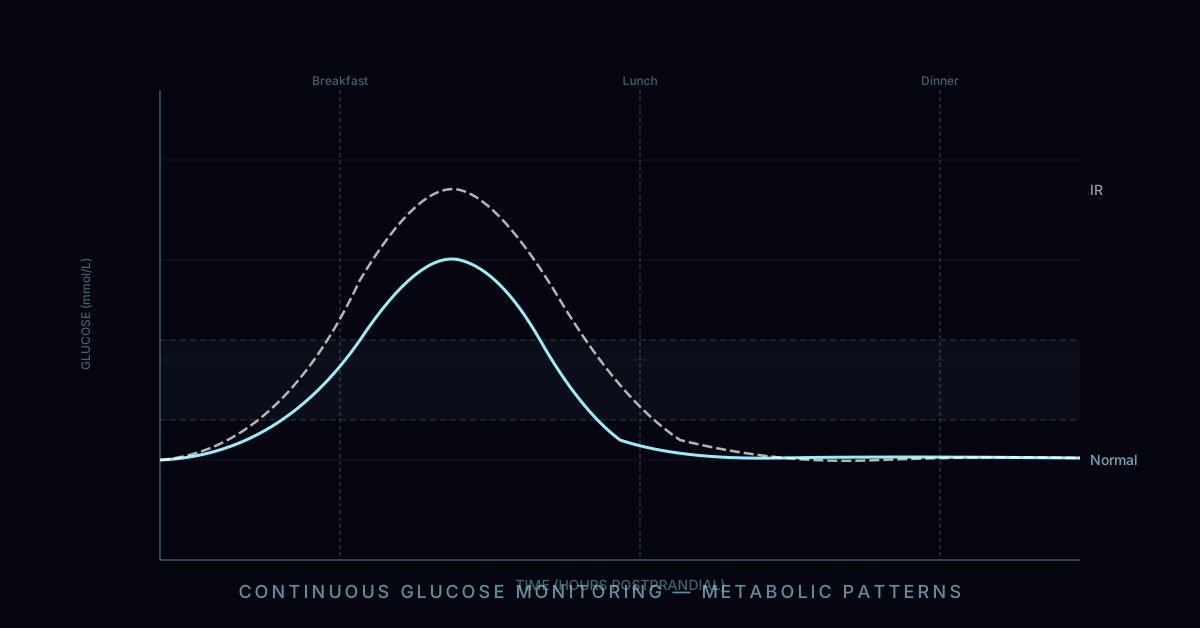
Continuous glucose monitoring (CGM) is increasingly used to personalise remission protocols, enabling real-time feedback on which foods and meal patterns produce the largest glucose excursions in individual patients. Studies at the Weizmann Institute (Segal, Elinav et al., Cell 2015) demonstrated enormous inter-individual variability in postprandial glucose responses to identical foods, driven by gut microbiome composition, genetic factors, and meal context — suggesting that population-level dietary prescriptions are necessarily suboptimal for many individuals.
CGM use during a type 2 diabetes remission programme allows patients to identify personal glucose-spiking foods, quantify the glucose cost of specific choices, and motivate adherence through real-time biofeedback. Several commercial programmes now incorporate CGM as a central coaching tool — though the incremental benefit over CGM-free programmes in achieving remission has not yet been demonstrated in adequately powered RCTs.