Quick Answer
Environmental toxins are chemical, biological, and physical agents — heavy metals, mycotoxins, synthetic chemicals, EMF, artificial light, and water contaminants — that impose measurable biological costs at everyday exposure levels. Their shared downstream target is mitochondrial function: all major environmental toxins impair cellular energy production, generate reactive oxygen species, and accelerate the hallmarks of ageing. Testing is available; remediation is evidence-based. The primary obstacles are clinician awareness and access to appropriate panels.
The Ancestral Mismatch: Why Modern Environments Are Biologically Expensive
Human physiology was calibrated over roughly 200,000 years of Homo sapiens evolution and millions more years of hominin evolution before that. The environments our ancestors inhabited were extraordinarily different from the ones most people now live in. As explored in depth in our articles on the pre-agricultural human health baseline and the neolithic transition and modern disease, the shift from a hunter-gatherer existence to settled agriculture — and the subsequent industrial and digital revolutions — compressed more change into a few thousand years than evolution can plausibly adapt to in that timeframe.
The result is a profound mismatch between the environments our biology expects and the ones we actually inhabit. Our ancestors experienced: natural light cycling from dawn-red through midday-blue to sunset-red, then darkness; drinking water filtered through mineralised rock and soil; air free of volatile organic compounds, synthetic particulates, and industrial combustion products; no persistent organic pollutants bioaccumulated in the food chain; direct contact with the earth's electrical field. Today's average urban dweller experiences none of these with any consistency. The health consequences are not hypothetical — they are measurable in blood, urine, and tissue.
Environmental medicine is not fringe. The World Health Organization estimates that 24% of the global burden of disease is attributable to modifiable environmental risk factors. The field's challenge is not evidence — it is clinical recognition, testing infrastructure, and the mismatch between the pattern of diffuse multi-system dysfunction that environmental toxicity produces and the organ-specific diagnostic categories that conventional medicine is organised around.
Heavy Metals: The Mitochondrial Wrecking Crew
Heavy metals are among the most comprehensively studied environmental toxins, with a mechanistic literature stretching back decades. Lead, mercury, cadmium, arsenic, and aluminium are the five of greatest concern for population-level health because they are pervasive in industrial food chains, contaminated water supplies, occupational exposures, and legacy pollution. What unifies them biologically is their ability to disrupt metal homeostasis — the finely regulated balance of essential minerals that enzymatic function depends on — and their specific affinity for mitochondria.
As detailed in our dedicated piece on heavy metals and mitochondrial damage, the mechanisms are multiple and converging. Lead displaces calcium and zinc from electron transport chain enzymes. Mercury binds thiol groups on complex I and III, generating superoxide at points in the respiratory chain that normally produce ATP. Arsenic inhibits the pyruvate dehydrogenase complex, the enzymatic gate through which glucose carbon enters the citric acid cycle. Cadmium induces mitochondrial permeability transition and disrupts the voltage-gated transport of ions across the inner mitochondrial membrane. Aluminium promotes lipid peroxidation in mitochondrial membranes, degrading the structural integrity that makes proton gradient maintenance possible.
The clinical picture of chronic low-level heavy metal accumulation is non-specific: fatigue that does not resolve with rest, cognitive slowing, peripheral neuropathy, immune dysregulation, hormonal disruption, and accelerated biological ageing. Blood testing captures only acute or ongoing high-level exposure. Urine testing, organic acids, and hair mineral analysis are better suited to assessing body burden. Sources to address include: old paint and plumbing (lead), large predatory fish (mercury), tobacco smoke and some occupational dusts (cadmium), contaminated groundwater (arsenic), and aluminium cookware and some antiperspirants (aluminium).
Key heavy metal exposure sources
- Lead: Pre-1978 paint, old plumbing, imported ceramics, some folk medicines
- Mercury: Tuna, swordfish, shark; some dental amalgams; coal combustion
- Cadmium: Tobacco smoke, non-organic leafy vegetables grown in contaminated soil, some phosphate fertilisers
- Arsenic: Contaminated groundwater, rice (particularly rice bran), some chicken (from feed additives)
- Aluminium: Processed food additives, some antacids, aluminium cookware (especially with acidic foods)
Mould Mycotoxins: The Hidden Indoor Epidemic
Mycotoxins are secondary metabolites produced by fungi — particularly Stachybotrys, Aspergillus, Penicillium, and Chaetomium species — that grow in water-damaged buildings. An estimated 50% of buildings in the United States have had significant water damage, and water damage is a prerequisite for the kind of prolonged mould growth that produces clinically significant mycotoxin exposure. Yet mycotoxin illness remains under-diagnosed in conventional medicine, partly because the symptoms mimic dozens of other conditions and partly because the mainstream diagnostic framework does not accommodate a diffuse neuroimmune condition triggered by a home or workplace environment.
Our comprehensive article on mould, mycotoxins, and chronic illness covers the full clinical picture. The key insight from Shoemaker's biotoxin illness research is that genetic susceptibility matters enormously: people carrying certain HLA-DR/DQ haplotypes lack the innate immune capacity to efficiently clear biotoxins from circulation. For genetically susceptible individuals, even moderate mycotoxin exposure in a water-damaged building produces a self-perpetuating neuroimmune inflammatory cascade that does not resolve when the exposure stops without targeted treatment. For non-susceptible individuals in the same building, the same exposure may produce little or no discernible effect.
The primary mycotoxins of clinical concern are ochratoxin A (produced by Aspergillus and Penicillium, nephrotoxic and immunosuppressive), trichothecenes including satratoxins (produced by Stachybotrys, inhibit ribosomal protein synthesis), aflatoxins (Aspergillus flavus and parasiticus, potent liver carcinogens), and gliotoxin (Aspergillus fumigatus, suppresses phagocytosis and depletes glutathione). Ochratoxin A in particular has been associated with chronic kidney disease, IgA nephropathy, and Balkan endemic nephropathy in populations with high dietary exposure. At the mitochondrial level, satratoxins from Stachybotrys disrupt the mitochondrial membrane potential and induce apoptosis in neurons — the likely mechanism behind the severe cognitive symptoms that define Stachybotrys-related illness.
Building inspection (ERMI score, HERTSMI-2), visual contrast sensitivity testing (VCS), and urine mycotoxin panels are the first-line assessments. Treatment requires removing the exposure first; no amount of supplementation or medication compensates for ongoing mycotoxin inhalation.
Light as an Environmental Toxin: EMF, Blue Light, and the Circadian System
Light is not merely a visual input. As explored in detail in our articles on EMF and health research and light pollution and human health, the electromagnetic spectrum intersects with human biology at multiple levels, from the non-visual photoreception that drives circadian entrainment to the infrared wavelengths that directly stimulate mitochondrial cytochrome c oxidase activity. When the light environment is distorted — as it is in any modern building with LED overhead lighting, screens, and the absence of genuine darkness at night — multiple biological systems are simultaneously dysregulated.
The circadian dimension is the best characterised. The suprachiasmatic nucleus (SCN) of the hypothalamus uses light information, transmitted primarily via the melanopsin-containing intrinsically photosensitive retinal ganglion cells (ipRGCs), to synchronise the body's 24-hour biological clock. The ipRGCs are maximally sensitive to short-wavelength blue light around 480 nm — precisely the wavelength that LED and fluorescent lighting emits in abundance. Evening exposure to screens and overhead LED lighting delays and suppresses the nocturnal melatonin rise, fragments sleep architecture, and desynchronises the peripheral clocks in metabolic organs. Our dedicated pieces on blue light and circadian damage and indoor lighting, air quality, and cognitive function expand on these mechanisms with full citation trails.
On radiofrequency electromagnetic fields (RF-EMF) — the frequencies produced by Wi-Fi, mobile phones, and cellular networks — the evidence is genuinely more mixed than either side of the public debate acknowledges. Thermal effects at high intensities are established and regulated. Non-thermal biological effects at consumer-level exposure intensities remain contested, with a substantial minority literature reporting effects on reactive oxygen species generation, voltage-gated calcium channels, sperm motility, and sleep quality, and a larger literature failing to replicate these effects under controlled conditions. The IARC Group 2B classification (possibly carcinogenic) from 2011 reflects genuine scientific uncertainty rather than established risk. The prudent position is to reduce unnecessary exposure from high-proximity devices (sleeping with a phone against the head, for example) without elevating this precaution to the same priority as heavy metal or mycotoxin remediation, where the evidence for harm is considerably stronger.
Office environments deserve specific attention. A standard fluorescent or cool-white LED office provides approximately 500 lux of blue-enriched light, often for 8–10 hours, with no spectral variation across the day. This flat, high-blue-content light profile provides poor circadian signalling, suppresses afternoon cortisol more than daylight would, and generates meaningfully more oxidative stress in the retina than natural light cycling. Designing office environments with circadian-supporting dynamic lighting — higher correlated colour temperature (CCT) and intensity in the morning, warmer and dimmer in the afternoon — reduces self-reported fatigue and improves cognitive performance on sustained attention tasks.
Water Quality: What Your Cells Are Actually Drinking
Water is the medium in which virtually all cellular chemistry occurs. The quality of the water entering cells — its mineral content, its contaminant load, its deuterium concentration, and the electrical properties of its hydrogen bond network — has biological consequences that dwarf the attention the topic receives in mainstream health discourse. Our detailed article on water quality and cellular hydration covers this territory in depth.
The contaminants of greatest clinical concern in municipal water systems are: chlorine and chloramine disinfection byproducts (trihalomethanes, haloacetic acids — regulated carcinogens that are nonetheless present at permitted levels in most treated water), lead from legacy pipe infrastructure that leaches into water in transit (the Flint, Michigan crisis was exceptional in scale but not in mechanism), PFAS (per- and polyfluoroalkyl substances, known as 'forever chemicals' for their biological and environmental persistence, detected in over 40% of US municipal water systems in a 2023 USGS survey), nitrates from agricultural runoff (endocrine disruptors at low concentrations, particularly in infants and pregnant women), and arsenic from geological deposits (a significant concern in parts of the western United States, South Asia, and Bangladesh).
PFAS deserve particular attention given the breadth and strength of their health associations. Epidemiological studies link PFAS exposure to thyroid dysfunction, reduced vaccine efficacy, increased cancer risk (particularly kidney and testicular), altered lipid metabolism, and impaired fetal development. Because PFAS are lipophilic, they accumulate in adipose tissue, liver, and the lipid-rich mitochondrial membrane, where they disrupt beta-oxidation, uncouple oxidative phosphorylation, and induce hepatic oxidative stress. Reverse osmosis filtration reduces PFAS to near-undetectable levels; activated carbon filtration provides partial reduction depending on filter age and PFAS chain length; standard sediment filters have minimal effect.
Therapeutic Light and Grounding: The Remediation Side
Environmental medicine is not only about identifying and removing toxic inputs — it also encompasses restoring the beneficial environmental inputs that modern life has inadvertently eliminated. Two of the most evidence-supported interventions in this category are therapeutic light (photobiomodulation) and grounding.
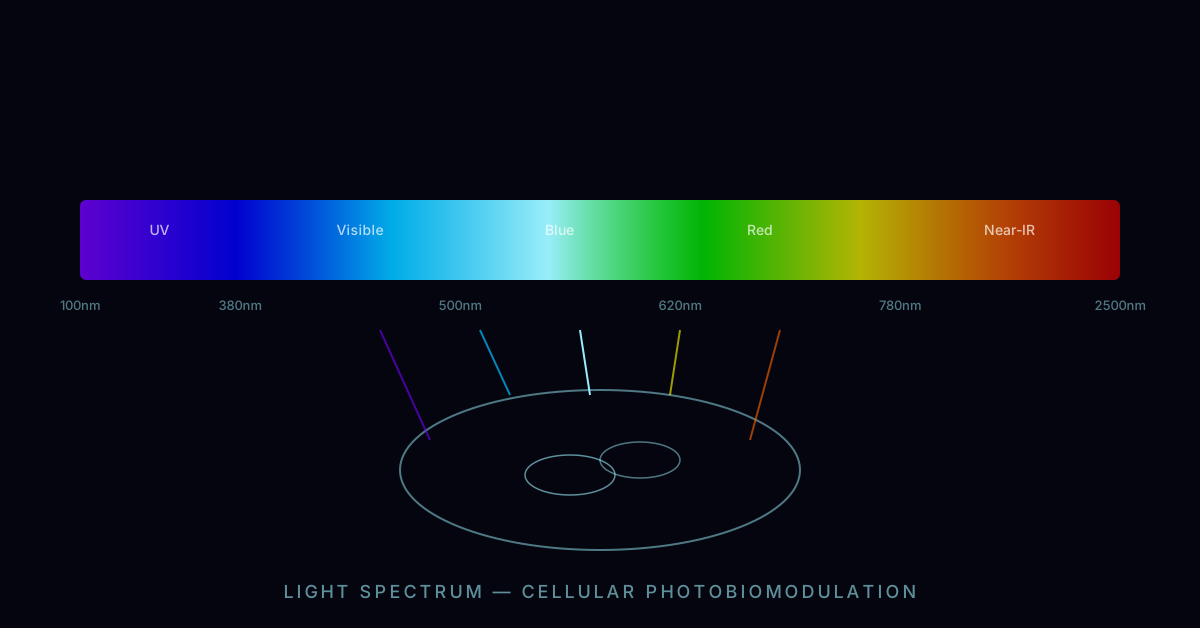
Photobiomodulation (PBM), described in detail in our articles on photobiomodulation and red-light therapy evidence, uses wavelengths in the red (620–700 nm) and near-infrared (700–1100 nm) range to stimulate mitochondrial function through the absorption by cytochrome c oxidase (complex IV of the electron transport chain). This increases ATP synthesis, reduces reactive oxygen species, promotes nitric oxide release, and activates gene expression programs involved in antioxidant defence, anti-inflammation, and tissue repair. Our article on infrared light and mitochondria covers the quantum mechanistic basis of this absorption in detail. The relevance to environmental medicine is that natural sunlight provides abundant red and near-infrared wavelengths throughout the day, particularly at dawn and dusk — wavelengths that modern indoor environments almost entirely eliminate. PBM devices replicate this missing input.
Grounding (earthing), reviewed in our piece on grounding and earthing evidence, refers to direct physical contact with the earth's surface, allowing the transfer of free electrons from the earth's negatively charged electric field into the body. The proposed mechanism is that these electrons serve as antioxidants, neutralising positively charged free radicals at the site of inflammation. Several small randomised controlled trials have found that grounding reduces markers of systemic inflammation, improves sleep quality, reduces cortisol dysregulation, and decreases blood viscosity (Chevalier et al., 2012, 2015; Ghaly & Teplitz, 2004). The effect sizes are modest but the intervention is essentially cost-free. Pre-modern humans maintained near-constant direct electrical contact with the earth; modern footwear and building materials have nearly eliminated this.
Synthetic Chemicals: PFAS, Phthalates, and the Endocrine Disruption Problem
Beyond the categories above, the modern chemical environment contains thousands of synthetic compounds that did not exist until the 20th century and for which human biology has no evolutionary preparation. Of greatest current concern are: PFAS ('forever chemicals', ubiquitous in food packaging, non-stick cookware, waterproofing, and firefighting foam), phthalates (plasticisers in PVC products, cosmetics, and food packaging, potent anti-androgens), bisphenols (BPA and its replacements BPS and BPF, found in plastics, thermal paper receipts, and food can linings, oestrogen mimics), organophosphate pesticides (widespread in the food supply, neurotoxic at subclinical levels, with associations with Parkinson's disease and cognitive development impairment in children), and glyphosate (the world's most widely used herbicide, found in most non-organic grain products, associated with gut microbiome disruption and potential carcinogenicity).
The endocrine disruption hypothesis, originally proposed by Theo Colborn and colleagues in Our Stolen Future (1996) and now supported by a large biomedical literature, holds that low-dose combinations of synthetic chemicals at environmentally realistic concentrations interfere with hormone signalling in ways that standard toxicological testing — which evaluates single chemicals at high doses — consistently misses. The Endocrine Society's 2015 Scientific Statement on endocrine-disrupting chemicals concluded that the evidence for a link between endocrine disruptors and human health effects is "strong" — particularly for reproductive outcomes, neurodevelopment, thyroid function, and obesity and type 2 diabetes risk.
Practical reduction strategies: filter drinking and cooking water (reverse osmosis for PFAS, activated carbon for chlorine byproducts); reduce use of plastic food containers and packaging, particularly with heat; choose organic for the highest-pesticide crops (EWG Dirty Dozen); use stainless steel, glass, or cast iron cookware; transition to fragrance-free personal care products; ventilate indoor spaces to reduce volatile organic compound accumulation.
Indoor Air Quality: The Environment You Ignore Most
Most people spend over 90% of their time indoors, yet indoor air quality receives a fraction of the public health attention devoted to outdoor air pollution. Indoor air frequently contains higher concentrations of several important pollutants than outdoor air: volatile organic compounds (VOCs) from building materials, furnishings, cleaning products, and personal care products; particulate matter from cooking (especially gas cooking, which is among the most significant indoor pollution sources), candles, and incense; formaldehyde off-gassed from pressed wood furniture and some insulation materials; carbon dioxide from inadequate ventilation (CO2 above 1,000 ppm meaningfully impairs cognitive performance); radon from geological uranium decay (the second leading cause of lung cancer in the US); and biological contaminants including mould, dust mite allergens, and pet dander.
As our article on indoor air quality and cognitive function documents, the cognitive effects of indoor air quality are measurable and substantial. CO2 levels commonly found in office conference rooms (1,500–2,500 ppm) reduce cognitive performance on complex decision-making tasks by 50% or more compared to well-ventilated conditions (400–600 ppm). Fine particulate matter (PM2.5) crosses the blood-brain barrier and has been associated with neurodegeneration in long-term epidemiological studies. VOC exposure at levels found in new buildings or recently renovated spaces is sufficient to produce headache, concentration difficulties, and fatigue in sensitive individuals.
High-CADR HEPA air purifiers, CO2 monitors, improved ventilation, and transition from gas to induction cooking are among the highest-leverage indoor air quality interventions. Houseplants have a role — the NASA Clean Air Study established that certain species remove VOCs — though the effect size per plant is modest relative to a quality air purifier.
Testing Protocols: From Screening to Comprehensive Assessment
The major challenge in clinical environmental medicine is that standard primary care laboratories are not configured to assess environmental toxin burden. The tests described below typically require referral to integrative or functional medicine practitioners or are available through direct-to-consumer testing platforms. Our article on functional medicine lab tests provides a broader framework for interpreting these results in a clinical context.
| Toxin category | First-line test | Comprehensive test | Key markers |
|---|---|---|---|
| Heavy metals | Blood lead, mercury | Urine toxic metals (unprovoked) | Pb, Hg, Cd, As, Al, Tl |
| Mycotoxins | VCS test + C4a, TGF-β1 | Urine GPL-MycoTOX panel | OTA, trichothecenes, aflatoxins |
| PFAS | Serum PFAS panel (Quest/LabCorp) | Expanded serum PFAS (22+ compounds) | PFOA, PFOS, PFHxS, PFNA, PFDA |
| Oxidative stress | Plasma glutathione, SOD activity | 8-OHdG, F2-isoprostanes, OAT | DNA oxidation, lipid peroxidation |
| Mitochondrial function | Organic acids test (OAT) | Mitochondrial Function Panel | Krebs cycle intermediates, CoQ10 |
When reviewing results, it is important to appreciate that "normal" ranges on heavy metal and environmental toxin panels often represent statistical population averages rather than biologically optimal levels. The average American has detectable lead in blood because lead exposure is near-universal in populations that have lived through the era of leaded paint and petrol — this does not mean those average levels are safe. PFAS are detectable in the blood of over 97% of the US population. Interpret these tests in clinical context, not against population "norms" that reflect universal contamination.
Our broader guide to inflammation markers in blood tests covers the downstream inflammatory consequences of environmental toxin exposure and is a useful complement to direct toxin testing.
Priority Interventions: Where to Start
The volume of environmental medicine literature can make the field feel paralysing. A practical framework is to address exposures in order of evidence strength and remediation feasibility:
Address any active mould exposure first
If you live or work in a building with visible mould, a history of water damage, or a musty odour, this takes priority. Ongoing mycotoxin inhalation overrides every other intervention. Get an ERMI test; if elevated, remediate the source or relocate.
Filter your water
Install a reverse osmosis system for drinking and cooking water. This addresses PFAS, heavy metals from plumbing, chlorine byproducts, and arsenic in a single step. Cost: £150–400 for under-sink installation.
Restore your light environment
Get bright natural light in the morning (10–20 minutes outdoors, no sunglasses). Eliminate blue-spectrum light after sunset (blue-blocking glasses, warm-spectrum bulbs, night mode on screens). This is free and produces measurable circadian improvements within days.
Test and address heavy metals if clinically indicated
Order urine heavy metal testing if you have unexplained fatigue, cognitive dysfunction, peripheral neuropathy, or known historical exposure (dental amalgams, occupational, old paint). Remediation is dietary, environmental, and where indicated, chelation under medical supervision.
Improve indoor air quality
A high-CADR HEPA purifier (Levoit, Coway, IQAir) running in the bedroom and main living space removes PM2.5 and VOCs. A CO2 monitor in your home office costs £60–100 and will likely reveal ventilation problems you did not know you had.
Explore the QuanMed AI Platform
Related Articles
Sep 21, 2026
Heavy Metal Toxicity and Mitochondrial Damage: How Environmental Poisons Steal Your Energy
Lead, mercury, arsenic, and cadmium all target mitochondria specifically, disrupting the energy machinery every cell depends on.
Sep 20, 2026
Mould, Mycotoxins, and Chronic Illness: The Hidden Environmental Threat
Water-damaged buildings expose occupants to mycotoxins that can trigger chronic inflammatory illness.
Sep 19, 2026
EMF and Human Biology: What the Research Actually Says
EMF research is plagued by both genuine uncertainty and deliberate misinformation. Here is a clear-eyed look at the science.
Sep 26, 2026
Water Quality and Cellular Hydration: Why Not All Water Is Equal
From microplastics to mineral content to disinfection byproducts, what is in your water affects your cells.
Sep 27, 2026
Chronic Noise, Stress, and Your Circadian Clock: The Health Toll of Living Loud
The WHO classifies noise as the second-largest environmental health risk in Europe. Its effects go far beyond hearing loss.
Sep 28, 2026
Grounding and Earthing: What the Evidence Says About Connecting to the Earth
A small but growing body of peer-reviewed research supports claims that grounding reduces inflammation and improves sleep.